
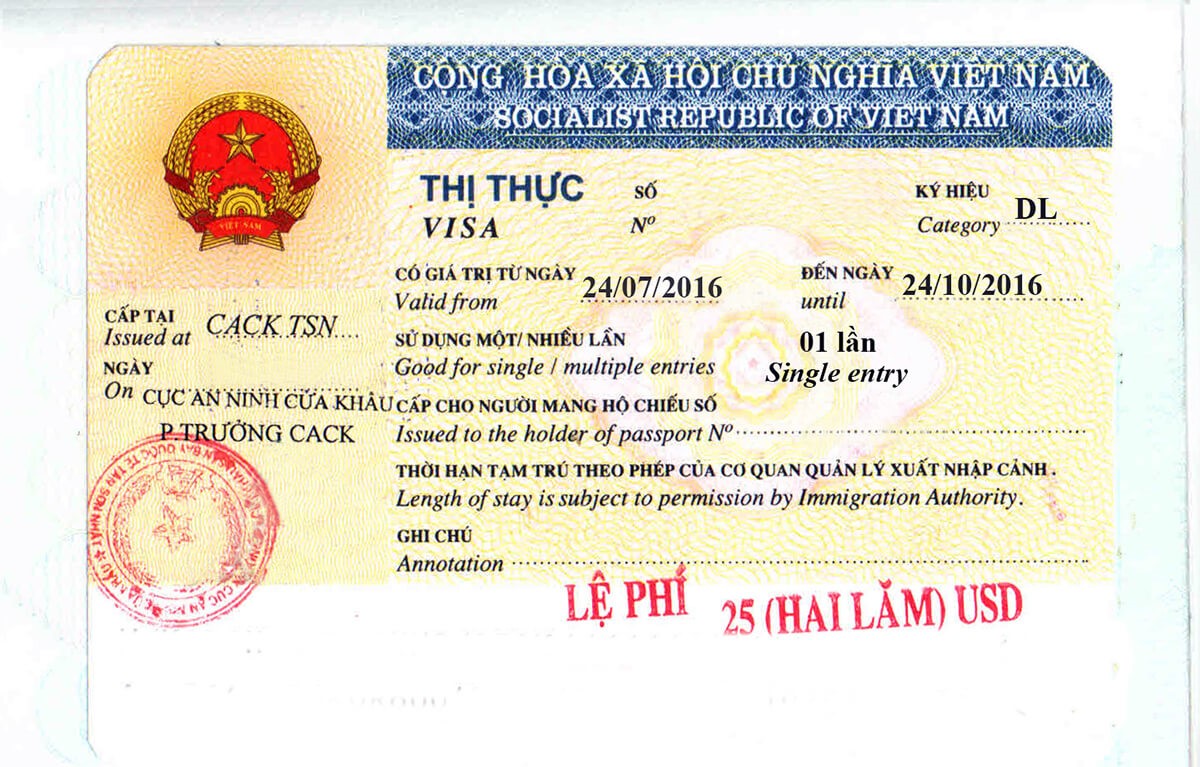
Visa on arrival is a type of visa issued by the Vietnam immigration department. Vietnam has currently granted every citizen in the world to easily get a visa on arrival. A visa on arrival is valid for a maximum of 12 months with multiple entry. Besides that, applicants can easily choose 1 or 3 months with single entry.
Visa on arrival is applied online by filling necessary information such as personal information, gender, date of birth, passport…via website to receive the approval letter and do online payment. This letter will be required to show at the airport to get visa stamp and pay for extra fee.
In addition, applicants have to share the approval letter with other customers (up to 40 people in one letter). For those who want to have a private one, they will be required to pay for extra fee.
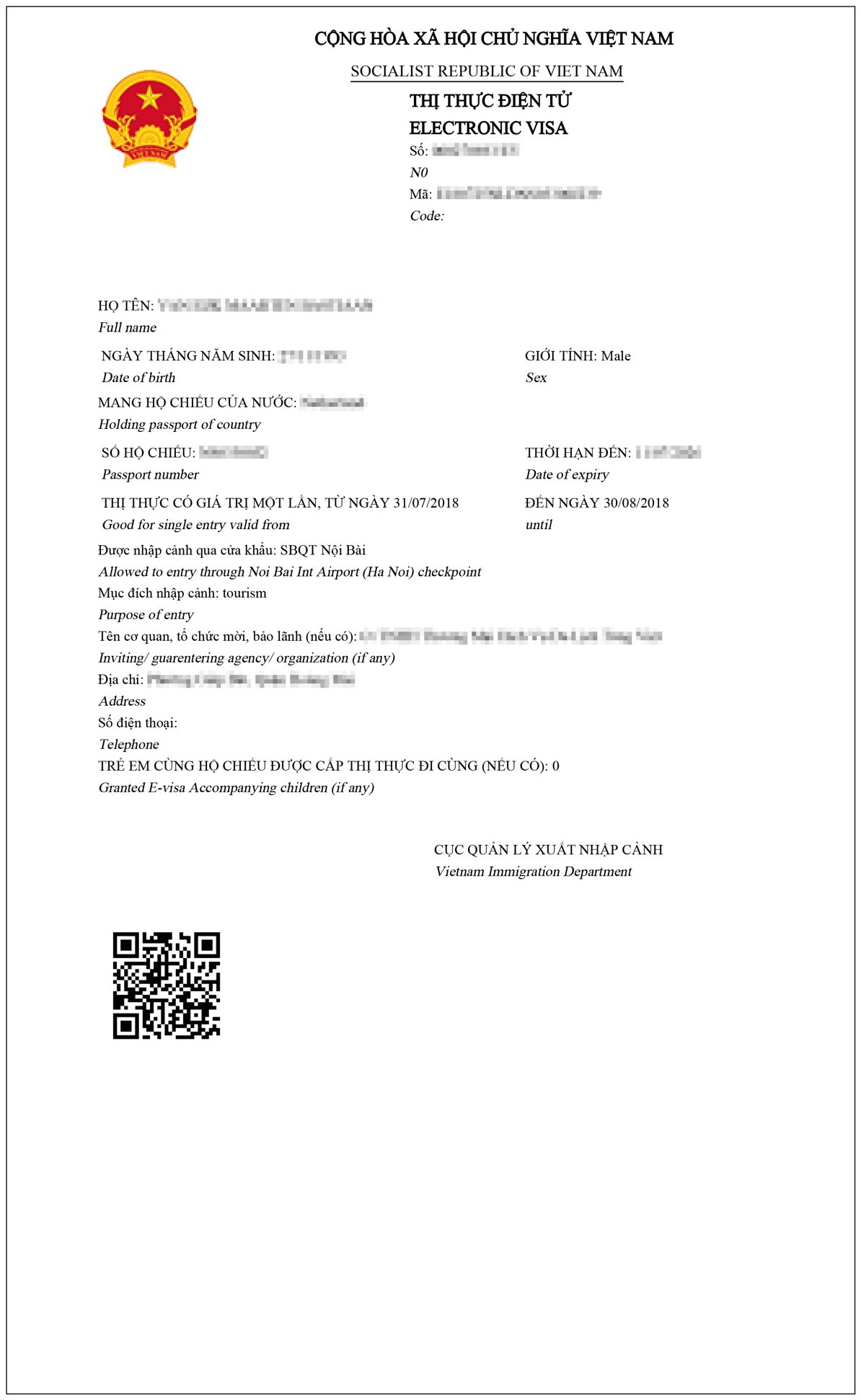
E-visa is an electronic visa issued by the Vietnam immigration department. Vietnam has currently granted citizens of 80 countries and 2 territories. An e-visa is valid for a maximum of 30 days with single entry only.
Applicants apply e-visa with necessary information such as personal information, gender, passport…You will do online payment and receive electronic visa via email, then print this visa to show at the airport, you don’t have to pay any extra fee after doing online payment.
Difference between Visa on arrival and E-visa:
| Visa on arrival | E-visa | |
| Eligibility | All countries | 80 countries + 2 territories |
| Entry ports | 6 international airports | 8 international airports + 16 land borders + 9 sea ports |
| Number of entry | Single or multiple (1 month – 12 months). It is possible to extend visa | Single (maximum 30 days). It is impossible to extend visa |
| Normal process | 2 working days (extra fee with express service) | 2 working days (extra fee with express service) |
| Fees | From 6 USD + Stamp fee on arrival (from 25 USD).
It depends on your nationality or type of visa. |
Tourism purpose: 40 USD/person
Business purpose: 55 USD/ person |
| Documents | No documents required | Passport and digital photo |
| How to apply | Apply online | Apply online |
Vietnam Visa On Arrival And Vietnam E-visa – Which One Is Better?
According to the above table, you will clearly see the difference between e-visa and visa on arrival. E-visa has simple way to do but it is just suitable for those who want to stay in a short time for traveling or business.
Visa on arrival is a little more complicated than e-visa (cause needing to get the visa sticker at the airport), but everybody can apply for this visa, and stay longer in Vietnam.
Therefore, basing on your real situation, you can choose E-visa or Visa On Arrival:
- If you are not in the list of 80 countries and 2 territories which are eligible for E-visa, you surely have to choose visa on arrival.
- If you enter Vietnam through the border gates or seaports, you have only one choice: e-visa.
- In case you need more than 1 month of stay, you must choose visa on arrival.
- In case you need a multiple entries, you must choose visa on arrival.
- In case that you can use both E-visa and visa on arrival (your country is eligible for both E-visa and visa on arrival; you need a single entry with less than 30 days of stay, enter through the airport), you can choose either E-visa or visa on arrival.


You must be logged in to post a comment.