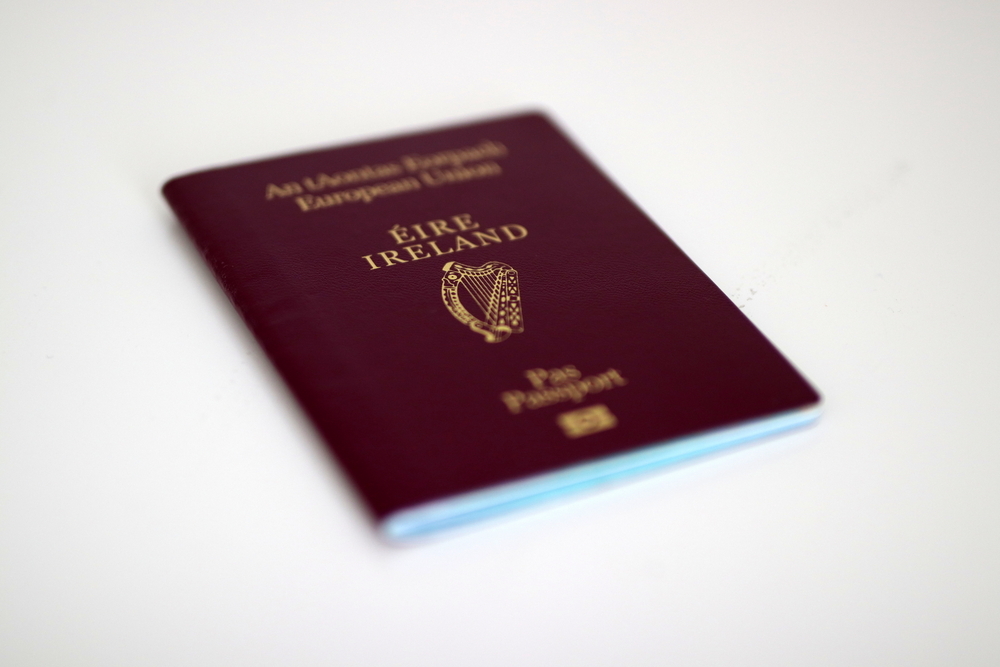
Your flight from Ireland to Vietnam leaves tomorrow, but the visa application you submitted still has not produced an approved visa. At this point, repeatedly refreshing your inbox and hoping the result arrives before departure is not a particularly useful plan. What matters now is knowing exactly where the application stands, whether any action is required from you, and how much usable time remains before you need to complete airline check-in. A case that might feel manageable when departure is a week away can become genuinely time-sensitive when the same status is still showing the day before the flight.
Having only one day left does not automatically mean that your Vietnam trip cannot go ahead, nor does an application still under review necessarily mean that something has gone wrong. It does, however, change how you should manage the situation. An application that is still being processed is not the same as an issued visa, and your practical deadline arrives earlier than the departure time printed on your ticket. Instead of waiting until tomorrow morning to decide what to do, check the existing application today, determine whether it is simply under review or requires a correction, prepare your Irish passport and exact flight details, and compare the remaining processing window with the time at which you actually need to be ready for travel. If those two timelines no longer fit comfortably together, it may be time to assess an urgent processing option.
Your Vietnam Visa Is Still Under Review and You Fly Tomorrow: What Should You Do First?
When your flight is only one day away, the first step is to check the exact status of the application you have already submitted. Do this before assuming that the visa has been delayed, submitting another application or simply deciding to wait overnight.
The status you find determines what should happen next. An application that is still under review needs to be approached differently from one that has already been approved or one that has been returned because information needs to be corrected.
| Current Situation | Practical Next Step |
|---|---|
| Application is still under review | Confirm the status and calculate how much usable time remains before the flight |
| Visa has been approved | Obtain the issued visa and check all important details immediately |
| Correction or amendment is requested | Correct the requested information accurately, resubmit it and reassess the remaining time |
| Flight leaves tomorrow | Treat the case as time-sensitive today rather than waiting until departure day |
| Only several hours remain | Consider immediate case assessment rather than relying only on continued waiting |
The important change when you are flying tomorrow is that there are now two timelines running at the same time. One is the visa-processing timeline; the other is your travel deadline. Even if the application itself is not dramatically overdue, the second timeline can make the situation urgent.
Your objective today is therefore not simply to ask, “When will my visa arrive?” A more useful question is: “Can the unresolved visa situation realistically be completed within the time I still have before I need the document for travel?”

An Application Still Under Review Is Not the Same as an Issued Vietnam Visa
One of the most important distinctions to understand is the difference between having submitted a visa application and actually having an issued visa.
If your application is still under review, you have not yet reached the same stage as a traveller whose e-visa has already been approved and issued. This is why it is risky to build your departure plan around the assumption that an application still being processed will function in the same way as the final visa document.
This does not mean you should immediately conclude that tomorrow’s trip is impossible. It simply means you should work with the status you actually have rather than the status you hope to have by the time you reach the airport.
With one day remaining, clarity becomes particularly important. If the visa has already been issued, the next step is to verify it. If the application is genuinely still under review, you need to decide whether the remaining processing window is compatible with the flight. If a correction has been requested, the priority changes again because the requested information must first be dealt with accurately.
In other words, “application submitted” and “visa ready for travel” are two different points in the process, and the distinction matters much more when departure is tomorrow.
Check the Application Status, Not Only Your Email Inbox
When travellers are waiting for an e-visa, it is very common to keep refreshing the email inbox for an approval message. Email notifications are useful, but they should not be the only source you rely on when the flight is this close.
Check the existing application using the appropriate application or registration information and determine exactly what the system currently shows. Look for whether the case remains under review, has already been approved, or requires some form of correction or additional action.
In practical terms, you want to answer several questions at once:
- Is the application genuinely still being processed?
- Has a final visa already been issued?
- Has the system requested a correction?
- Is there another message or action that you may have missed?
- If the visa is approved, can you obtain the issued document?
The difference between “I have not received an approval email” and “my application definitely still has no result” can be important. Checking the actual application gives you a better basis for making a decision than simply waiting for another email notification.
If the application is confirmed to be under review, write down or keep ready the current status, application code and original submission date. You may need these details if the remaining travel time becomes too short for passive waiting.
With a Flight Tomorrow, Your Real Deadline Comes Before Departure
When travellers say, “My flight is tomorrow,” they often calculate the remaining time from the scheduled departure printed on the ticket. For a visa issue, that can give a misleading sense of how much time is actually available.
Imagine that your flight from Dublin is scheduled to leave at 1:30 PM tomorrow. That does not mean you can comfortably wait until shortly before 1:30 PM for the visa situation to be resolved. Before the aircraft departs, you still need time to receive the visa result, inspect the issued document, prepare your travel paperwork, travel to the airport and complete airline check-in and document verification before boarding.
The practical sequence is closer to:
Visa becomes available → Check the issued visa → Prepare travel documents → Travel to Dublin Airport → Airline check-in and document verification → Security and boarding procedures → Flight departure
This means your usable visa-processing window ends earlier than the scheduled flight departure.
The same principle becomes even more important if the flight is early in the morning. A traveller who sees “tomorrow” on the ticket may feel that almost a full day remains, when the actual amount of useful time before leaving for the airport could be much shorter.
For that reason, calculate backward from when you realistically need to be ready for airline check-in, rather than treating the aircraft’s departure time as the final deadline.
Does the Standard Vietnam E-Visa Processing Timeline Still Matter?
Yes, but when the flight is tomorrow, the standard processing period is only part of the picture.
Vietnam’s official e-visa guidance currently describes the processing period in working days. That information is useful when determining whether your application is still around the normal processing window or has already taken longer than expected.
However, a next-day flight changes the practical question.
Consider two Irish travellers whose applications both show the same status. One is travelling to Vietnam in ten days, while the other is scheduled to depart tomorrow. Even if the visa applications are at exactly the same processing stage, the two travellers do not have the same problem. The first still has a meaningful time buffer; the second has very little room for an additional delay.
This is why a visa application does not need to be dramatically overdue before it becomes an urgent travel issue. Sometimes the flight deadline creates the urgency before the processing delay itself becomes unusually long.
If your application is still within or close to the normal processing period but your flight is tomorrow, do not assume that this automatically means something is wrong. At the same time, do not ignore the travel deadline simply because the application has not yet exceeded the normal timeline by very much.
Both factors need to be considered together.

Should You Keep Waiting When Your Flight Is Tomorrow?
There is no single answer that applies to every application. Continuing to monitor an existing case may still be reasonable in some circumstances, but waiting without assessing the remaining window becomes increasingly risky as the flight gets closer.
A useful way to think about the situation is:
| Approximate Time Remaining | Practical Approach |
|---|---|
| Around 24 hours | Check the exact status and assess whether the current processing timeline still fits |
| 12–24 hours | Prepare the application, passport and flight information; urgent assessment becomes more relevant |
| 6–12 hours | The usable window before airport procedures is becoming limited |
| Only a few hours | Immediate case assessment is generally more practical than relying only on passive waiting |
These time ranges are not promises about how quickly a visa will be issued. They are a way of understanding how your decision-making should change as the amount of usable time decreases.
For example, if you check the application this afternoon and your flight is tomorrow evening, you still have more room to assess the situation than someone whose flight departs early tomorrow morning. Saying “my flight is tomorrow” therefore does not provide enough information on its own.
The exact departure time matters.
The closer you get to the point where you need to leave for the airport, the less useful it becomes to simply hope that the normal process will finish in time without evaluating what other appropriate options may be available.
Can an Existing Vietnam Visa Application Be Handled Urgently?
If the application is still under review and your flight from Ireland is tomorrow, it may be appropriate to assess whether urgent support is available for the existing case.
This does not mean every unresolved application can automatically be accelerated. The available approach can depend on factors such as the current application status, when the original application was submitted, how much time remains before travel and what processing arrangements are available at that point.
The first step should generally be to understand the application you already have rather than immediately abandoning it or creating another application without a clear reason.
For an urgent assessment, prepare your Irish passport together with the existing application or reference code, current status and original submission date. You should also have your exact flight information ready.
Instead of saying only:
“My visa is still processing and I fly tomorrow.”
Provide something more specific, such as:
“My existing application is still under review, and my flight leaves Dublin Airport at 1:30 PM tomorrow.”
That information makes it much easier to calculate the actual remaining window and determine which available approach, if any, fits the journey.
What Information Should an Irish Traveller Prepare Right Now?
When less than a day remains, having the correct information ready can save valuable time. An urgent case is much easier to understand when the application and flight details are provided together.
| Information | Why It Matters |
|---|---|
| Irish passport | Confirms the traveller and passport details |
| Application or reference code | Identifies the existing visa case |
| Current application status | Shows which stage requires attention |
| Original submission date | Helps establish the processing timeline |
| Flight number | Confirms the relevant journey |
| Departure airport | Helps determine the practical pre-flight window |
| Exact departure time | Shows how much usable time actually remains |
| Arrival information in Vietnam | Helps confirm the intended itinerary |
The difference between “I fly tomorrow” and “I depart Dublin tomorrow at 1:30 PM” is significant when the visa is still unresolved.
If only several hours remain, the departure time can materially change how the situation should be assessed. Providing accurate information from the beginning is therefore more useful than simply describing the case as urgent.
How Can Irish Travellers Request Urgent Vietnam Visa Support?
If your existing Vietnam visa application is still under review and your flight from Ireland is tomorrow, you can submit the current situation to our Vietnam visa support service for assessment:
The purpose is not to automatically tell every traveller to submit a new application or purchase the fastest possible service. Instead, the existing case can first be compared with the actual time remaining before travel so that an appropriate available option can be assessed.
Depending on the individual situation, our support can include reviewing an existing application, assessing its current status, checking passport and application information, comparing the remaining processing window with the flight deadline, evaluating available urgent-processing arrangements and answering questions related to Vietnam visas and entry.
Our Vietnam visa support service has more than 15 years of experience assisting international travellers with Vietnam visa matters and provides 24/7 support for both normal and time-sensitive cases. Application information and supporting documents can also be reviewed before further processing to help identify avoidable issues, while applicable services are handled according to the relevant service conditions and refund policy.
For eligible cases, same-day or few-hour processing support may be available, depending on the existing application status, submission timing, flight deadline and actual processing availability. These timeframes should not be interpreted as a fixed guarantee for every unresolved application.
When your flight is tomorrow, provide the exact travel details from the beginning. The more accurately the remaining window can be calculated, the more realistically the available options can be assessed.

What If the Application Has Been Returned for Correction?
If your application no longer simply shows that it is under review but instead asks you to correct or amend information, the situation needs to be handled differently.
Read the request carefully and identify exactly what needs to be changed. Correct the relevant information accurately and resubmit it according to the instructions. Do not ignore the amendment because the flight is close; urgency does not remove the need to provide correct information.
After resubmission, reassess the processing timeline from the new situation.
One mistake travellers can make is thinking, “I already waited several days before the correction, so once I fix it, the visa should arrive immediately.” That assumption can be risky. A corrected and resubmitted application still needs to be assessed against the amount of time now remaining before the flight.
If departure is tomorrow, the normal waiting window after a correction may no longer fit comfortably into the itinerary. In that situation, once the requested information has been properly corrected, the remaining travel deadline should be evaluated again to determine whether an urgent option is appropriate.
Should You Submit Another Application Because the Flight Is Tomorrow?
Do not automatically submit another application solely because the flight is close and the existing case has not yet produced a result.
When people become worried about missing a flight, creating another application can feel like a way of improving their chances. In reality, doing so without first reviewing the existing case may leave you with multiple reference numbers, different submission times and potentially inconsistent information.
More importantly, a second application does not automatically answer what is happening with the first one or guarantee a faster result.
A more orderly approach is to confirm the existing application’s status, identify whether any action is required, calculate the remaining travel window and then determine which next step is appropriate for that specific situation.
In other words, review first, decide second. The fact that the flight is tomorrow makes the decision more urgent, but it does not make an unplanned duplicate application automatically useful.
What If Your Flight Is Now Only a Few Hours Away?
If the situation has progressed from “my flight is tomorrow” to “my flight is in a few hours,” the usable processing window is now substantially smaller.
At that point, prepare the essential information immediately: your Irish passport, existing application code, current status, original submission details, flight number, departure airport and exact flight time.
Do not assume that a flight departing in six hours gives you six full hours to resolve the visa. Part of that time may already need to be reserved for travelling to the airport, airline check-in, document verification, security and boarding.
This is why an exact flight schedule matters so much in highly time-sensitive cases. Every additional hour spent waiting also reduces the amount of time available to respond if the application remains unresolved.
When the remaining window is measured in hours rather than days, immediate case assessment becomes more practical than continuing to monitor the application without a clear decision point.
What Should You Check Immediately After the Visa Is Approved?
If the visa is finally approved close to departure, it can be tempting to download the document and head straight for the airport. Before doing that, take a few minutes to verify the issued visa against the Irish passport you will use for travel.
Check the full name and passport number carefully. Review the visa’s validity start date, validity end date, number of permitted entries and other relevant information shown on the issued document. Make sure the validity period covers the journey you are actually about to make.
This final review is particularly important when approval comes at the last minute because there may be very little time left to respond if you notice a discrepancy.
Once the information has been checked, keep the electronic visa readily accessible with your other travel documents.
The objective is not merely to receive an approval notification. It is to have an issued visa that matches your passport and the trip you are about to take.
Common Mistakes to Avoid When Your Flight Is Tomorrow
When only one day remains, travellers sometimes make rushed decisions because they are focused entirely on getting a result as quickly as possible. Speed matters, but accuracy and good timing matter as well.
Common mistakes include:
- Waiting for an email without checking the actual application status.
- Treating an application still under review as though it were already an issued visa.
- Missing a correction or amendment request.
- Waiting until arrival at the airport before seriously assessing the unresolved visa.
- Providing only vague information such as “my flight is tomorrow.”
- Submitting additional applications without first reviewing the existing case.
- Failing to verify the issued visa because approval arrived close to departure.
Avoiding these mistakes does not guarantee a particular visa outcome, but it helps prevent the remaining travel window from being lost to problems that could have been identified earlier.
When only one day remains, accuracy and response time can become almost as important as processing speed itself.
Frequently Asked Questions
My Vietnam visa is still under review and I fly from Ireland tomorrow. What should I do first?
Check the exact application status today, prepare your existing application information and calculate how much usable time remains before you need to complete airline check-in. If the normal processing window no longer fits the trip, assess whether urgent support is appropriate.
Is an application that is still under review the same as having an issued Vietnam visa?
No. Submitting an application and receiving an issued visa are different stages. Do not plan your journey as though an unresolved application is already the final visa document.
Should I simply wait until tomorrow morning?
Waiting may still produce a result, but with a next-day flight it also reduces the time available to respond if the application remains unresolved. Checking and assessing the case today gives you a larger practical window.
Can my existing Vietnam visa application be processed urgently?
Depending on its current status, original submission timing, remaining flight window and available processing arrangements, an existing case may be assessed for urgent support. Not every application will have the same available options.
Should I submit another visa application immediately?
Not automatically. Review the existing case first rather than creating another application solely because the flight is close.
What should I do if the application asks me to correct information?
Complete the requested correction accurately and resubmit it. Then reassess the remaining processing time against your flight rather than assuming that the time already spent waiting means approval will be immediate.
My flight is only a few hours away. What should I do?
Prepare your passport, existing application details and exact flight information immediately. Calculate the remaining window from airline check-in rather than departure time alone, and seek an urgent case assessment if appropriate.
Conclusion: If Your Flight Is Tomorrow, Deal With the Visa Situation Today
A Vietnam visa application that is still under review one day before your flight from Ireland does not automatically mean the trip is lost, but it does mean the situation deserves attention today. The priority is to establish exactly what is happening with the existing application rather than relying only on email notifications or hoping that the result appears before you leave for the airport.
Check whether the application is still under review or requires a correction, calculate the usable time remaining before airline check-in, and prepare your Irish passport, application details and exact flight information. If the normal processing window no longer fits comfortably before departure, an urgent assessment may be appropriate. If the visa is issued, verify it immediately against your passport and itinerary before travelling. The aim is not to create unnecessary panic because the flight is tomorrow, but to use the remaining time intelligently while there is still an opportunity to respond.


You must be logged in to post a comment.