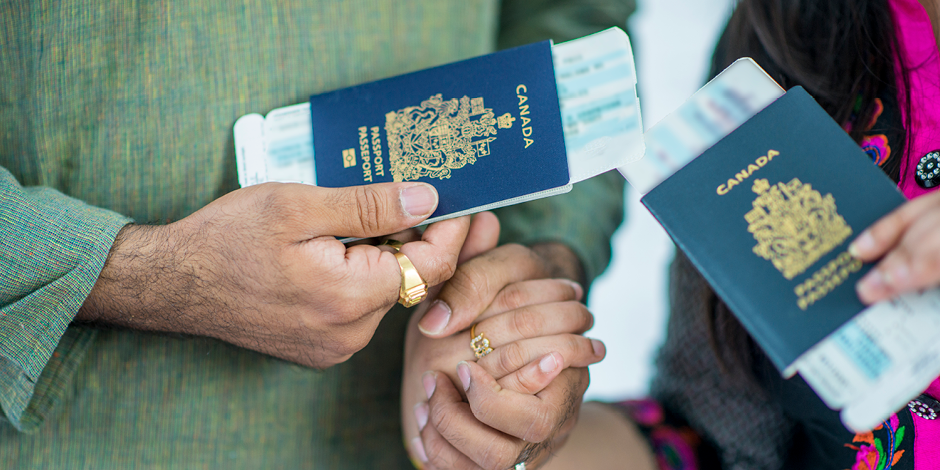
For many Canadian travelers, Vietnam is not necessarily the only destination on the itinerary. You might spend two weeks in Vietnam, fly to Thailand, return to Ho Chi Minh City, continue to Cambodia and enter Vietnam once more before flying home. In a journey like this, simply knowing that an e-visa can be valid for up to 90 days is not enough. You also need to know how many times that visa allows you to enter Vietnam during its validity. A longer visa does not automatically mean you can leave and return whenever you want, while each re-entry does not start a new 90-day period. Understanding the difference between visa validity and number of entries can therefore make a multi-country itinerary much easier to plan.
Can Canadians Get a 90-Day Multiple Entry Vietnam E-Visa?
Yes. Canadian passport holders can apply for a Vietnam e-visa valid for up to 90 days with a multiple-entry option under the current e-visa framework.
The main points are straightforward:
- The application can be arranged online.
- Visa validity can be up to 90 days.
- Multiple entry can be selected when appropriate for the itinerary.
- The actual valid-from and valid-until dates shown on the issued visa determine its usable period.
A 90-day multiple-entry visa can be particularly useful when Vietnam is one part of a wider Southeast Asia journey and you plan to leave the country and return during the same trip.

What Does “90-Day Multiple Entry” Actually Mean?
The easiest way to understand this visa is to separate validity from number of entries. They describe two different parts of your travel permission.
| Visa Detail | What It Means |
|---|---|
| Valid from | Beginning of the issued visa validity |
| Valid until | End of the issued visa validity |
| Multiple entry | Allows more than one entry into Vietnam while the visa remains valid, subject to its conditions |
In other words, visa validity answers “when can I use this visa?”, while multiple entry answers “can I enter Vietnam more than once during that period?”
The two conditions work together. Having a visa valid for a longer period does not by itself mean that multiple entries are permitted.
Can You Leave Vietnam and Come Back on the Same Visa?
Yes, provided that your issued visa permits multiple entry and your return to Vietnam falls within the visa’s applicable validity and conditions.
Consider this itinerary:
Canada → Vietnam → Thailand → Vietnam → Canada
There are two separate arrivals in Vietnam:
- Canada → Vietnam = Vietnam Entry #1
- Thailand → Vietnam = Vietnam Entry #2
The trip to Thailand itself is not what creates the need for multiple entry. What matters is that you enter Vietnam again after leaving it.
This distinction is useful for longer Southeast Asia trips: leaving Vietnam is not the main question; whether your visa covers your next arrival is.
How Many Times Can You Enter Vietnam During the 90 Days?
A multiple-entry e-visa is designed to permit more than one Vietnam entry during the visa’s issued validity period, subject to the conditions of the visa.
A typical journey could look like this:
Visa validity begins → Enter Vietnam → Leave → Re-enter Vietnam → Leave → Re-enter Vietnam → Visa validity ends
What does not happen is a new 90-day period beginning every time you arrive.
All entries and re-entries must remain consistent with the dates and other conditions of the visa that was actually issued.
Does the 90-Day Period Restart Every Time You Re-Enter Vietnam?
No. Re-entering Vietnam does not restart the validity period shown on your visa.
For example:
| Visa / Travel Event | Example |
|---|---|
| Valid from | October 1 |
| First entry | October 5 |
| Leave Vietnam | October 20 |
| Re-enter Vietnam | November 2 |
| Valid until | December 29 |
If you return to Vietnam on November 2, you should not calculate another 90 days beginning from November 2.
In this example, December 29 remains the important end date shown on the visa. Leaving and returning does not move that date forward.
This is one of the most important rules to understand when planning a longer trip around Southeast Asia.

When Do Canadians Actually Need Multiple Entry?
Instead of counting how many countries you plan to visit, count how many times you will enter Vietnam.
| Travel Itinerary | Vietnam Entries |
|---|---|
| Canada → Vietnam → Canada | 1 |
| Canada → Vietnam → Thailand → Canada | 1 |
| Canada → Vietnam → Thailand → Vietnam → Canada | 2 |
| Canada → Vietnam → Cambodia → Vietnam → Thailand → Vietnam → Canada | 3 |
The second example is especially useful. Even though the traveler visits both Vietnam and Thailand, there is still only one Vietnam entry because the traveler flies home from Thailand.
By contrast, the third example requires another arrival into Vietnam after Thailand.
Count your Vietnam entries—not the number of countries on your itinerary.
Do You Need Multiple Entry for a Two- or Three-Month Stay?
Not necessarily. A longer stay and multiple entry solve two different travel needs.
Consider these examples:
Scenario A: 70 continuous days in Vietnam
The traveler enters Vietnam once and remains in the country throughout the stay. The trip is long, but the length itself does not create a second Vietnam entry.
Scenario B: 10 days in Vietnam → 5 days in Thailand → 7 more days in Vietnam
This traveler spends much less time in Vietnam overall but enters the country twice.
Therefore, do not select multiple entry simply because you intend to spend a long time in Vietnam. Look at both how long your visa needs to remain valid and how many separate Vietnam arrivals your itinerary contains.
What Happens If You Leave Vietnam With a Single-Entry Visa?
If your visa allows only one entry and that entry has already been used, you should not assume that the same authorization can be used again after leaving Vietnam.
For example:
Canada → Vietnam → Cambodia → Vietnam → Canada
If the itinerary includes returning to Vietnam after Cambodia, the entry arrangement needs to account for that second arrival.
This is best checked before leaving Vietnam, rather than discovering after departure that the existing visa does not match the return journey.
What If Your Southeast Asia Itinerary Changes?
A relatively small itinerary change can alter the number of Vietnam entries you need.
Suppose your original plan is:
Canada → Vietnam → Thailand → Canada
You later change it to:
Canada → Vietnam → Thailand → Vietnam → Canada
Adding the final Vietnam stay means the itinerary now includes another Vietnam entry.
Whenever your route changes, compare the revised itinerary with:
- Visa valid-from date
- Visa valid-until date
- Permitted number of entries
- New Vietnam arrival date
- Intended entry point
- Passport information
Do not assume that a visa arranged for the original itinerary will automatically cover every later change.
Can You Use a Multiple-Entry E-Visa at Any Vietnam Border?
Do not assume so. Multiple entry and entry-point eligibility are separate considerations.
Vietnam’s e-visa system covers eligible entry and exit points across several categories, including:
- International airports
- Designated land-border checkpoints
- Eligible seaports
Before traveling, check that the entry point you intend to use is compatible with the applicable e-visa rules and your issued visa arrangement.
A simple way to remember the distinction is:
Multiple entry answers “how many times?” Entry-point rules answer “where?”
This is particularly important for travelers combining flights with overland trips through Cambodia, Laos or other neighboring destinations.
How Can Canadians Arrange a 90-Day Multiple Entry Vietnam Visa?
If your trip requires both a longer validity period and more than one arrival in Vietnam, the visa should be arranged according to your complete itinerary, rather than only the first flight into the country.
Canadian travelers who would like assistance reviewing their itinerary and visa requirements can submit their travel information through our Vietnam visa support service:
Depending on the traveler’s situation, our service can assist with:
- Multi-country itinerary review
- Single-entry vs. multiple-entry assessment
- Visa validity-date checking
- Passport and document review
- Application support
- Entry-point questions
- Urgent processing options where available
The goal is not to select multiple entry simply because it sounds more flexible. A better approach is to choose a visa arrangement that reflects how long your complete journey lasts and how many times you actually intend to enter Vietnam.

Frequently Asked Questions
Can Canadians get a 90-day multiple-entry Vietnam visa?
Yes. Canadian passport holders can apply for a Vietnam e-visa with validity of up to 90 days and a multiple-entry option under the applicable e-visa framework.
Can I leave Vietnam and return using the same e-visa?
If your issued visa permits multiple entry, remains valid and otherwise covers your return, it can be used for more than one Vietnam entry according to its applicable conditions.
Does every entry give me another 90 days?
No. Re-entering Vietnam does not restart the validity period shown on the issued visa.
Do I need multiple entry if I visit Thailand?
Not simply because you visit Thailand. If you leave Vietnam for Thailand and then fly directly home without returning to Vietnam, there is no second Vietnam entry. Multiple entry becomes relevant when your itinerary includes returning to Vietnam.
Do I need multiple entry for a 60-day continuous stay in Vietnam?
Not simply because the stay lasts 60 days. The length of validity and number of entries are separate considerations.
Can I travel from Vietnam to Cambodia and then return to Vietnam?
Yes, but your visa arrangement needs to cover the return entry. A multiple-entry visa can support more than one Vietnam arrival when the trip remains within the applicable visa validity and conditions.
Can I use a multiple-entry e-visa at any border?
Do not assume that every border is eligible. Check the applicable entry-point requirements before finalizing your route.
Conclusion: Count Your Vietnam Entries, Not Just Your Travel Days
A Vietnam 90-day multiple-entry visa is particularly useful when your itinerary requires both sufficient validity and more than one arrival into Vietnam. A long continuous stay does not automatically require multiple entry, while a much shorter Southeast Asia trip may need it if you leave Vietnam and later return.
Before choosing your visa arrangement, ask three practical questions: How long does my complete itinerary last? How many times will I enter Vietnam? Do all of those entries fall within the validity and conditions of the visa? Answering those questions makes it much easier to choose an entry arrangement that actually matches the journey.


You must be logged in to post a comment.