
Planning a trip from Canada to Vietnam can feel fairly straightforward until the visa question comes up. Perhaps you are spending only a long weekend in Ho Chi Minh City, taking a one-week trip through Hanoi and Da Nang, adding Vietnam to a longer Southeast Asia itinerary, heading exclusively to Phu Quoc, or simply connecting through a Vietnamese airport on your way somewhere else. Each itinerary looks different, yet they often lead Canadian travelers to the same question: does a Canadian passport actually require a visa for Vietnam? Part of the confusion comes from treating short stays, visa exemptions, airport transit and special destination rules as though they were interchangeable. They are not. A three-day city break may be treated differently from an eligible Phu Quoc-only holiday, while an airport connection may depend on whether you actually pass through Vietnamese immigration. A journey that enters Vietnam twice also raises a different issue from one that ends as soon as you leave the country. Before deciding whether a visa is necessary, it therefore makes sense to look at the entire journey—not simply the number of days on your itinerary. The sections below break down the main situations Canadian passport holders should consider before traveling to Vietnam.
So, Do Canadian Citizens Need a Visa for Vietnam?
In general, Canadian ordinary passport holders need an appropriate visa or other valid entry permission to enter Vietnam unless their particular circumstances qualify for an applicable visa exemption.
Canada is not among the nationalities currently covered by Vietnam’s general unilateral visa-exemption arrangements for ordinary Canadian tourists. This means you should not assume that a standard trip to Hanoi, Ho Chi Minh City, Da Nang or another mainland destination is visa-free simply because you are traveling on a Canadian passport.
There are, however, special circumstances that can change the answer—most notably the visa exemption that can apply to eligible trips involving Phu Quoc Island.
A useful way to begin is to look at your actual itinerary:
| Your Vietnam Trip | General Visa Situation |
|---|---|
| Hanoi, Ho Chi Minh City or Da Nang | Visa generally required |
| Short mainland Vietnam vacation | Visa generally required |
| Visiting friends or relatives | Appropriate visa or entry permission generally required |
| Business trip | Appropriate entry permission for the actual purpose is generally required |
| Eligible Phu Quoc-only trip | May qualify for a special visa exemption |
| Airport connection without entering Vietnam | Depends on the actual transit arrangement |
| Leave Vietnam and return again | Your visa or entry permission must cover the required return entry |
The key point is that Canadian nationality alone does not provide general visa-free access to Vietnam.
Instead, you need to look at whether a specific exemption applies to your journey.

Is Vietnam Visa-Free for Canadian Passport Holders?
For a normal trip involving entry into mainland Vietnam, Canadian ordinary passport holders should not treat Vietnam as a generally visa-free destination.
Several assumptions commonly create confusion.
A traveler might think:
- “I’m staying for only a few days.”
- “I already have a return ticket.”
- “I’m only going for tourism.”
- “I’ve booked all my hotels.”
- “I’m traveling on an organized tour.”
- “I’m not staying anywhere for very long.”
None of those facts, by itself, creates a general visa exemption for a Canadian passport holder.
A short trip and a visa-exempt trip are two different concepts.
Visa exemption is determined by the immigration rules that apply to your passport and itinerary—not simply by how short or uncomplicated your journey appears to be.
This distinction matters because travelers sometimes encounter visa-free rules online that apply to citizens of other countries and assume that the same conditions apply to Canadians.
Vietnam has visa-exemption arrangements covering various nationalities and passport types, but those arrangements are nationality-specific and sometimes purpose- or passport-specific.
The safest approach is therefore to check the rule that applies specifically to the passport you will actually use.
Does a Short Trip to Vietnam Mean Canadians Do Not Need a Visa?
No general exemption is created simply because a Canadian traveler plans to spend only a few days in Vietnam.
This is one of the most important misunderstandings to clear up.
Consider three common comments:
“I am only staying for three days.”
“My Vietnam vacation is only one week.”
“I’m just going to Ho Chi Minh City for the weekend.”
The short duration of these trips does not, by itself, remove the visa requirement.
For example:
| Example Itinerary | Does the Short Duration Itself Create a Visa Exemption? |
|---|---|
| 3 days in Ho Chi Minh City | No |
| 5 days in Hanoi | No |
| 7-day Hanoi–Da Nang trip | No |
| Eligible Phu Quoc-only stay | Different exemption rules may apply |
This means a Canadian traveler visiting Hanoi for three days should not assume they are exempt merely because another nationality may be allowed a visa-free stay of a particular duration.
The same principle applies to five-day or seven-day trips.
What matters is whether an exemption actually applies to your passport and circumstances, not simply the number printed beside “trip duration” on your itinerary.
The important exception worth understanding separately is Phu Quoc.
Can Canadian Citizens Visit Phu Quoc Without a Visa?
Potentially, yes.
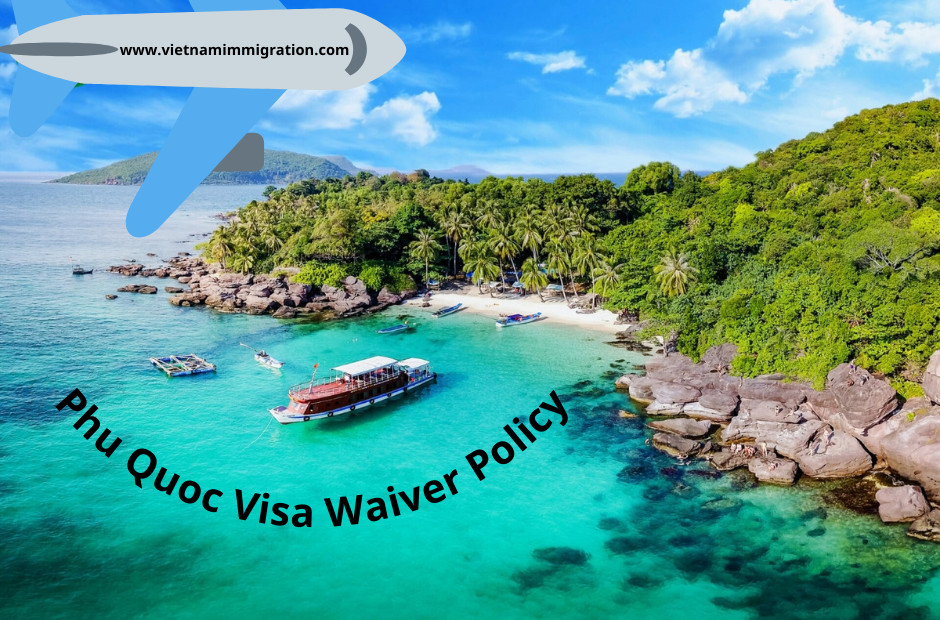
Vietnam maintains a special visa-exemption arrangement for eligible foreign passport holders entering and staying in Phu Quoc Island, with an exempt stay of up to 30 days when the applicable requirements are satisfied.
This rule is important for Canadian travelers because it is very different from a general Vietnam-wide visa exemption.
Think of it as a special Phu Quoc arrangement, not as proof that a Canadian passport receives 30 visa-free days everywhere in Vietnam.
Your full itinerary matters.
Before relying on the exemption, consider:
Where you enter → Where you stay → Whether you travel elsewhere in Vietnam → How you depart → How long you stay
For example:
Scenario A
Canada → eligible international routing → Phu Quoc → departure from Vietnam in accordance with the applicable exemption conditions
This type of journey may qualify for the Phu Quoc visa exemption when all current requirements are met.
Now compare it with:
Scenario B
Canada → Ho Chi Minh City → Phu Quoc → Hanoi → Canada
This should not simply be treated as a “30-day Phu Quoc visa-free trip.”
The traveler is visiting other parts of Vietnam, so the special Phu Quoc exemption should not be casually extended to the entire itinerary.
There is another useful detail: current Vietnamese official guidance states that foreigners traveling onward to Phu Quoc may still benefit from the exemption when they transit through another Vietnamese international border gate and remain within the applicable transit arrangement before continuing to the island.
That is quite different from entering mainland Vietnam as an ordinary visitor before traveling around the country.
The lesson is simple:
Phu Quoc visa exemption is an itinerary-based exception. It is not a blanket 30-day Vietnam exemption for Canadian citizens.
What If a Canadian Is Only Transiting Through Vietnam?
Transit is one of the situations where a simple “yes” or “no” answer can be misleading.
A Canadian traveler who merely changes flights at a Vietnamese airport may be in a very different position from someone who must pass through immigration, collect baggage and enter Vietnam before catching the next flight.
Questions worth checking include:
Will you remain in the international transit area?
If you remain airside and do not formally enter Vietnam, the situation may differ from that of an arriving visitor.
Will you have to pass through Vietnamese immigration?
Once an itinerary requires formal entry, the usual entry requirements become relevant.
Do you need to collect and recheck your luggage?
Separate flight arrangements can sometimes require passengers to retrieve baggage and complete additional airport procedures.
Are the flights booked on separate tickets?
Do not assume that two flights appearing on the same travel itinerary automatically mean the airline will transfer your baggage or keep you airside.
Do you need to change terminals or airports?
The physical requirements of the connection can affect whether formal entry becomes necessary.
For these reasons, blanket statements such as “a transit of fewer than X hours never requires a visa” are not a reliable way to assess every journey.
What matters is whether your specific connection allows you to remain in transit without formally entering Vietnam.
If you are unsure, confirm the baggage and transit arrangements with the airline operating your flights before departure.
Does a Canadian Need a Visa When Arriving by Land or Sea?
Vietnam visa requirements should not be thought of as rules that apply only to air travel.
Canadian travelers increasingly combine Vietnam with neighboring countries, creating itineraries such as:
Thailand → Cambodia → Vietnam
or
Cambodia → Vietnam → Laos
Others arrive as part of a cruise itinerary.
In these situations, the central question remains the same:
Are you formally entering Vietnam?
If the answer is yes, you need the appropriate entry authorization unless your circumstances fall under an applicable exemption.
The entry point also matters.
A visa or electronic visa should be compatible with the entry arrangements permitted under that authorization. Travelers planning to cross a land border should therefore confirm that the intended border checkpoint is eligible for their particular visa arrangement rather than assuming that every crossing works in the same way.
The same principle applies to sea entry.
A cruise passenger should not assume that arriving aboard a ship automatically removes immigration requirements. Procedures may depend on the cruise arrangement, port and travel documentation involved.
In short, whether you arrive by air, land or sea, the important issue is whether you are entering Vietnam and whether your documents allow that entry.
What If You Leave Vietnam and Come Back?
This situation is particularly important for Canadians taking a multi-country Southeast Asia trip.
Consider the following itinerary:
Canada → Vietnam → Cambodia → Vietnam → Canada
There are two separate entries into Vietnam.
Entering Vietnam successfully the first time does not automatically give you permission to come back after traveling to Cambodia.
Your visa or other entry authorization must cover the entire journey, including the second arrival.
If your authorization is valid only for a single entry, leaving Vietnam generally completes that entry. You should not assume the same single-entry authorization can simply be reused when you return.
For comparison:
Canada → Vietnam → Cambodia → Canada
requires only one entry into Vietnam.
But:
Canada → Vietnam → Cambodia → Vietnam → Canada
requires you to plan for the second arrival as well.
This is why travelers should examine the entire Southeast Asia itinerary before departure rather than checking only the first flight into Vietnam.
Vietnam’s electronic visa system currently provides both single-entry and multiple-entry options, which can accommodate different types of itineraries.
The important point for this article, however, is not how to apply for either one. It is simply that your permission to enter Vietnam must cover every time you intend to enter the country.
Does the Purpose of Travel Change the Visa Requirement?
Yes, the purpose of a trip can affect which immigration arrangement is appropriate.
For ordinary Canadian passport holders, however, changing the purpose from tourism to another reason should not be viewed as a way to avoid the need for appropriate entry authorization.
Whether you are going for tourism, business, a family visit or another activity, you should use an entry arrangement consistent with what you will actually be doing in Vietnam.
| Purpose | What Canadian Travelers Should Consider |
|---|---|
| Tourism | Use entry permission appropriate for tourism |
| Business | Requirements and supporting arrangements may differ from ordinary tourism |
| Visiting relatives | Check the entry arrangement appropriate to the visit |
| Study or work | Additional immigration or authorization requirements may apply |
| Transit | Depends on whether the itinerary requires formal entry into Vietnam |
A useful distinction is:
Your Canadian citizenship tells immigration authorities which passport and nationality rules apply to you; your purpose of travel helps determine which entry arrangement is appropriate.
For an ordinary Canadian passport holder, simply changing the purpose of the trip does not create a general Vietnam visa exemption.
This is also why travelers should never intentionally declare a different purpose merely because they believe another category will be easier.
Your stated purpose should reflect your real journey.
What Happens If You Arrive Without the Required Visa?
If your trip requires a visa or other entry authorization, it is best to resolve the requirement before beginning the journey.
There are two important stages where travel documents can matter.
Before departure: airline document checks
Airlines have responsibilities relating to the passengers they transport internationally and may check passports, visas and other travel documents during check-in or boarding procedures.
If the documents required for your destination are missing or unclear, this can create a problem before you even reach Vietnam.
On arrival: immigration inspection
When formally entering Vietnam, travelers are subject to immigration inspection.
Holding a visa does not itself create an unconditional right of entry; the final admission decision remains with the competent Vietnamese authorities.
For the same reason, it is better not to describe the consequences of missing documentation in absolute language such as “you will definitely be refused.”
Individual circumstances can differ.
The practical lesson is much simpler:
If your itinerary requires a Vietnamese visa or other entry permission, have the appropriate authorization arranged before traveling rather than expecting the issue to be resolved after arrival.
If You Do Need a Visa, What Is the Next Step?
Once you have established that your itinerary requires a visa, the question changes from “Do I need one?” to “Which entry option fits my trip?”
For eligible Canadian passport holders, Vietnam’s electronic visa system provides a practical online option. Vietnam currently issues e-visas with validity of up to 90 days and offers both single-entry and multiple-entry arrangements, subject to the validity and conditions of the visa actually granted.
The detailed application process is a separate topic. At this stage, your priorities are simply to determine:
- Your real purpose of travel
- Your intended dates
- Whether you need one or multiple entries
- Your planned entry point
- Whether your passport and itinerary meet the relevant requirements
Canadian travelers who would prefer assistance checking their visa requirements, application information or available processing options can use our Vietnam visa support service:
Depending on the case and service selected, assistance may include checking application information, helping with document preparation, answering questions about visa or entry requirements, providing processing support and explaining available urgent options where those options are actually available.
Professional visa assistance does not replace Vietnamese immigration authorities, and it should not be confused with an official government service. Visa issuance and final entry decisions remain under the authority of the competent Vietnamese authorities.
The purpose of assistance is simply to give travelers another source of support when their itinerary, timing or visa requirements are not straightforward.

Frequently Asked Questions About Vietnam Visa Requirements for Canadians
Do Canadian citizens need a visa to visit Vietnam?
In general, Canadian ordinary passport holders need an appropriate visa or other valid entry permission to enter Vietnam unless their particular circumstances qualify for an applicable visa exemption. Canada is not currently covered by Vietnam’s general visa-free arrangement for ordinary tourists simply by virtue of Canadian nationality.
Do Canadians need a visa for Vietnam for 3 days?
Yes, for a normal mainland Vietnam visit, staying only three days does not by itself create a visa exemption for a Canadian passport holder.
The visa question depends on the applicable immigration rule, not merely the short duration of the trip.
Do Canadians need a visa for Vietnam for one week?
A one-week stay does not automatically make a Canadian traveler visa-exempt.
For example, a seven-day trip covering Hanoi and Da Nang should not be treated as visa-free simply because it lasts less than a week.
Can Canadians visit Phu Quoc without a visa?
Eligible Canadian travelers may qualify for Vietnam’s special Phu Quoc visa exemption for a stay of up to 30 days when all applicable conditions are satisfied.
The complete itinerary matters, particularly whether the traveler is visiting only Phu Quoc under the exemption conditions or formally entering other parts of Vietnam.
Do Canadians need a visa to transit through Vietnam?
It depends on the actual transit arrangement.
A traveler who remains within the international transit area without formally entering Vietnam may be in a different situation from someone who must pass immigration, collect baggage or otherwise enter the country.
Check the specific connection with the airlines involved.
Do Canadians need a visa when entering Vietnam from Cambodia?
If a Canadian passport holder is formally entering Vietnam from Cambodia, appropriate entry permission is generally required unless an applicable exemption covers the traveler.
The fact that the journey is made by land rather than air does not automatically remove the visa requirement.
Do Canadians need another visa if they leave Vietnam and come back?
What matters is whether the existing visa or entry authorization covers the second entry.
A single-entry authorization should not be assumed to remain usable after the traveler has entered Vietnam and subsequently left. A traveler planning to return should ensure the authorization covers the required return entry.
Does having a Canadian passport guarantee visa-free entry to Vietnam?
No.
Holding a Canadian passport does not by itself provide a general visa exemption for ordinary travel throughout Vietnam. Visa-free eligibility depends on the immigration rules and exemptions applicable to the traveler’s particular circumstances.
Conclusion: Check Your Itinerary, Not Just Your Trip Length
For Canadian travelers, the most useful question is not simply “How many days will I be in Vietnam?”
A better way to determine your visa requirement is to look at the whole trip: where you are going, whether a specific exemption genuinely covers that itinerary, whether you will formally enter Vietnam, how many times you intend to enter and what you will be doing during your stay.
A three-day visit is not automatically visa-free. A return ticket does not create an exemption. Transit can depend on whether you enter the country. A second visit to Vietnam requires valid authorization for that second entry. And Phu Quoc has a special exemption that should be understood according to its own conditions rather than treated as a general Vietnam-wide rule.
Once you know that your journey does require a visa, you can move on to choosing the appropriate visa arrangement and preparing it before departure. Understanding the requirement first keeps that next decision much simpler.


You must be logged in to post a comment.