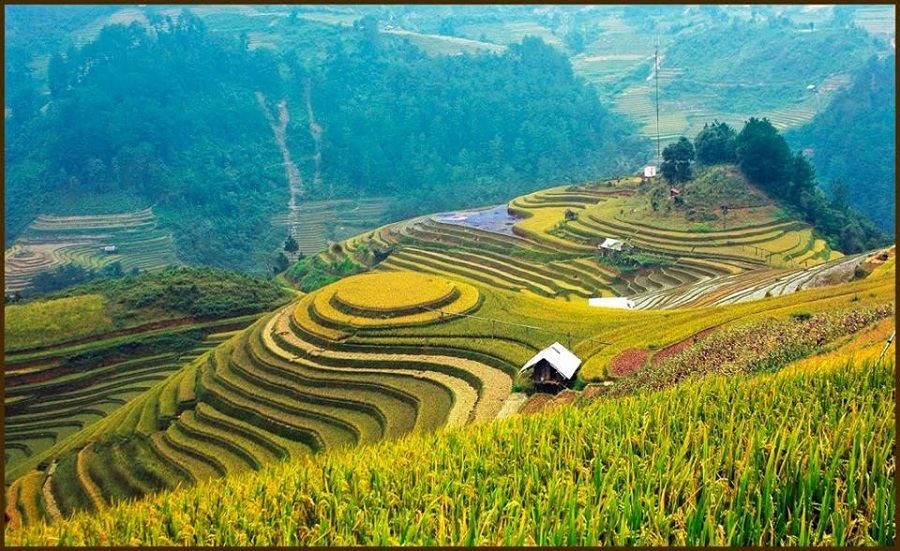
Mu Cang Chai is a highland district of Yen Bai province in the north adjoining Van Ban district of Lao Cai province, in the south by Muong La district of Son La province, in the west by Than Uyen district of Lai Chau province and in the east by Van Chan district of Lai Chau province. The district lies at the foot of the Hoang Lien Son Mountains, at an altitude of 1,000 m above sea level. To reach Mu Cang Chai district, go through Khau Pha pass – one of the four Great Passes of the Northwest. Mu Cang Chai is about 280km from Hanoi, each season of golden rice, many thousand people from all over the country come to visit.
When should you visit Mu Cang Chai?
Between September and mid of October is the season of golden rice, at this time Mu Cang Chai will be a bright yellow rice field, beautiful weather, favorable to visit here. The most appropriate time is from about 15-9 to 10/10 every year, before this time is the green rice field, after this time is finish of the harvest season
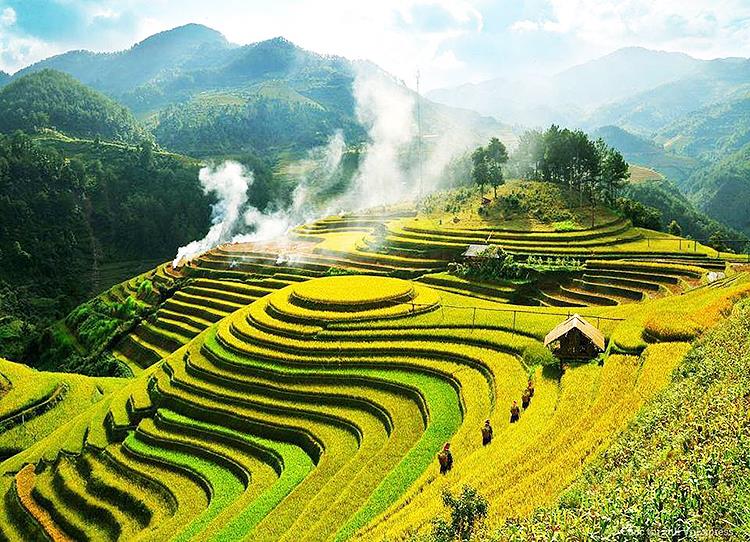
Between May and June, the flood season, when summer rains start pouring down the mountains, water is taken from the mountain to the terraced fields. Water spills into the fields making the arid soil softer and hatched so that the rice can be transplanted. This is also the time when farmers start plowing to prepare for a new crop. Therefore, in the mountainous terraced fields in the north, rice can only grow in one crop. The terraces scattered water in the sun to create a beauty that visitors must be surprised.
How to travel to Mu Cang Chai?
From Hanoi, you can go straight to Mu Cang Chai by motorbikes or passenger cars. Recently, Lao Cai highway has been completed, so only some car companies running the route Hanoi – Lai Chau. Many buses are still passing through. If you travel by car, when you arrive you can choose to rent a motorbike to wander around Mu Cang Chai Township and some neighboring communes to take photos and watch terrace rice fields. For motorcycle rental services, you can contact directly your hotels for more information.
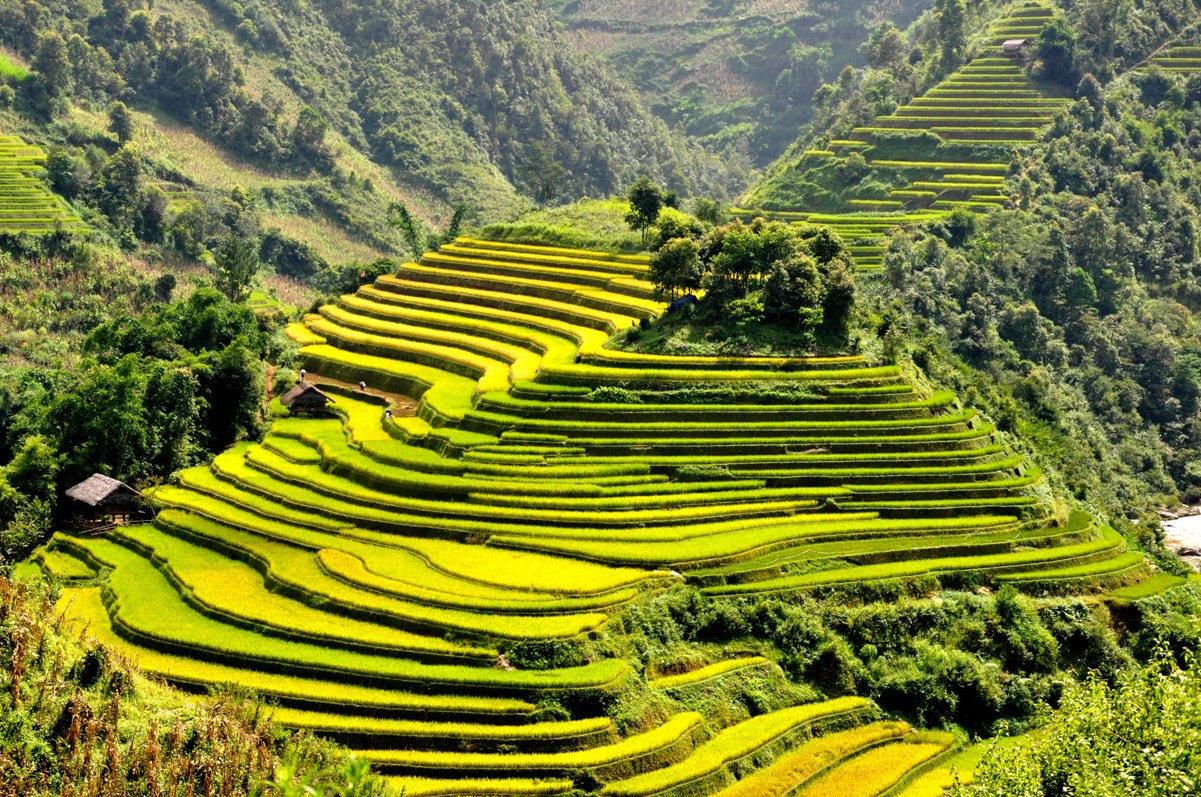
Homestay in Mu Cang Chai
If you come to Mu Cang Chai at peak times (such as the cultural festival of terraced fields), it is almost difficult to make reservations by the number of motels in Mu Cang Chai is not much. if you only plan to live in Mu Cang Chai 1 day or it is just one point in your journey, you can choose to sleep in the nearby areas such as Tu Le Commune, Nghia Lo Town …
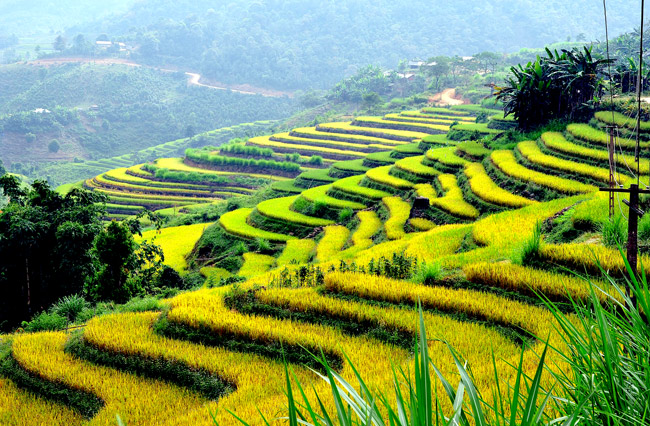
To capture beautiful pictures of Tu Le field, you should be at the peak Khau Pha pass from 7am to 9am (after this time it can still be sunny but will be blind, not visible). To do it, you should sleep at Tu Le or go further 7km to Khau Pha Pass, there is a chain of restaurant – guest house with about 20 rooms for visitors, from here it only takes about 15 minutes is up to the top of the pass.
Khau Pha Pass in Mu Cang Chai
This is one of the most steepy mountain passes in Vietnam (one of the four Great Northern Passes) crossing Khau Phau mountain, the highest mountain in Mu Cang Chai. Khau Pha Pass has the starting point of the section of National Highway 32 with 279 consecutive continuous road with Chau Pass in front of it and Vach Kim Pass behind it on the Street 32. From Yen Bai City, back to National Highway 32 After 5 hours, through Tu Le commune, Khau Phan pass of Mu Cang Chai district appears between a plateau surrounded by mountain ranges. The road winding around the old forests still bold features and the terraced fields of the Hmong and Thai ethnic people.
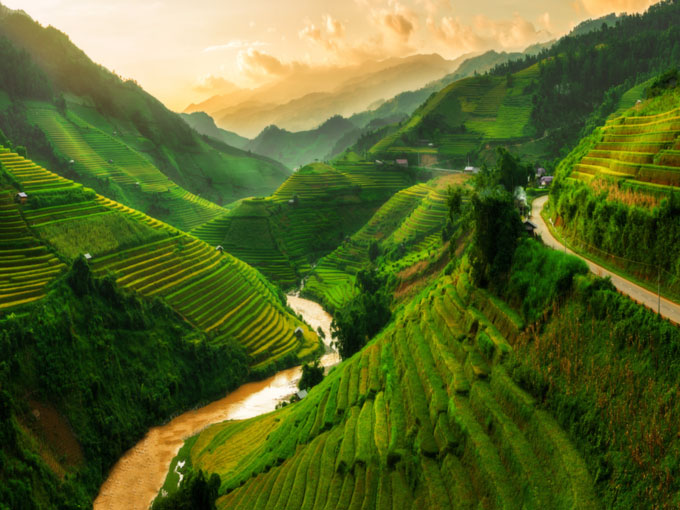
Khau Pha pass has two thirds of the gravel road, rocky boulder, only pass through Tu Le is new. Throughout the length of the pass there are several dozens of tight turns. On cloudy days, the pass is particularly dangerous for the drivers because the pass has no barriers or any warning signs.
The road has been degraded due to not being repaired regularly, easily landslide, subsidence because of the basalt red soil and it is weak. Adding to that is the constant stalking danger with rocks from the high mountains that can fall down any times. Few large trucks are crossing this road because the slope of the pass makes travel time too long.
 vietnamtravel.id
You must be logged in to post a comment.